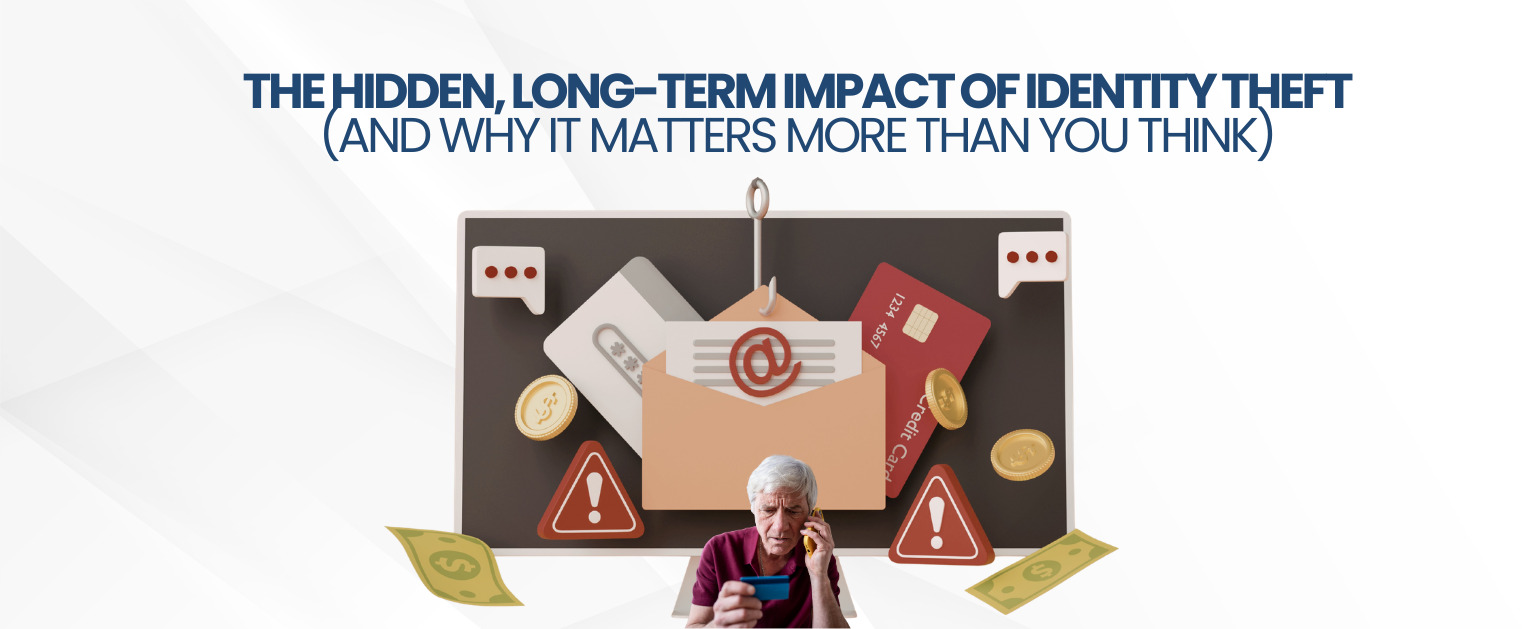
The Hidden, Long-Term Impact of Identity Theft (And Why It Matters More Than You Think)
Identity theft isn’t just a short-term inconvenience; it can leave lasting damage that affects your finances, reputation, and peace of mind for years.
While many people think of identity theft as a one-time financial loss, the reality is far more complex. The consequences can ripple across multiple areas of your life, often taking months or even years to resolve fully.
The Long-Term Effects You Should Know
- Credit Damage That Lingers
Fraudulent accounts and missed payments made by identity thieves can significantly lower your credit score. Even a single late payment can cause a major drop, making it harder—and more expensive, to get loans or credit in the future. - Ongoing Financial Strain
Victims often spend months disputing charges, closing compromised accounts, and recovering lost funds. During this time, unexpected expenses and limited access to credit can create serious financial pressure. - Compromised Health or Insurance Benefits
If someone uses your identity for medical services or insurance claims, it can lead to denied coverage, higher premiums, or inaccurate medical records—all of which can impact your care. - Loss of Government or Social Benefits
Identity theft can extend to government programs. Fraudulent claims made in your name may interrupt or delay benefits you rely on, requiring lengthy investigations to fix. - Account Takeovers and Digital Risks
Hackers may gain control of your email, banking, or social media accounts. This can lead to further fraud, data exposure, and reputational damage if accounts are misused. - Legal Complications
In some cases, identity thieves commit crimes under a victim’s name. Clearing your record may involve legal fees, documentation, and time-consuming processes. - Housing and Lifestyle Disruptions
A damaged credit profile can affect your ability to rent a home, secure utilities, or qualify for basic services, impacting everyday life. - Increased Exposure to Scams
Once your data is compromised, you may become a repeated target for scams, phishing attempts, and fraud schemes. - Emotional and Psychological Stress
Beyond the financial toll, identity theft often brings anxiety, frustration, and a lasting sense of vulnerability.
Why It Matters Now
Identity theft is becoming more common, fueled by cyberattacks, social engineering, and malware.
What’s more concerning is that many victims don’t realize it’s happening until significant damage has already been done.
What You Can Do
While recovery can take time, acting quickly can reduce the impact:
- Monitor your credit reports regularly
- Dispute suspicious transactions immediately
- Place fraud alerts or freeze your credit
- Secure your accounts with strong passwords and multi-factor authentication
Final Thought
Identity theft isn’t just about stolen money—it’s about stolen stability. The sooner you take steps to protect your information, the better you can safeguard your future.
Stay safe, stay alert, and stay secure.